Translate

Inside supersonic presidential jet that can fly at nearly TWICE the speed of sound

Henry Holloway

THIS is what a supersonic presidential plane that could hit speeds of 1,380mph as it jets at nearly twice the speed of sound could look like.

New renderings show the incredible supersonic presidential jet designed by Exosonic. that could halve travel time.

Exosonic has released the new concept images of a plane that could become Air Force TwoCredit: Zuma Press

The supersonic jet has space for conference callsCredit: Zuma Press

It also has space which triples up as office space, sleeping space and conference spaceCredit: Zuma Press

Pentagon officials last year commissioned a new prototype jet concept that could become the leading transport for the executive branch.

The US Air Force handed a $1million, 24 month, contract to aerospace start-up Exosonic as it laid out a concept for jet that could hit Mach 1.8.

This is double the speed of the President's 600mph jet, Air Force One.

It is hoped the jet would also solve one of the biggest problems with supersonic travel - the noise.


Exosonic boast their design - which can carry up to 70-passengers - can hit its top speed "over land and over water with a muted sonic boom".

The presidential version of the plane is cut down to just 31 seats to make room for teleconference facilities, office space and sleeping quarters.

Stephanie Chahan, Exosonic's principal aircraft interior designer, said the furnishing were designed so it can be versatile - making room for various staff members.

It is suggested that the supersonic jet could become Air Force Two, which usually carries the vice president, reports CNN.


"It needs to be flexible enough to fit a number of different missions, if it was ever in service," Chahan told DailyMail.com.

"So it has to be modular enough for the Secretary of Defense, fit the requirements of the First Lady - whatever their requirements may be - and those requirements can vary significantly."

20 business class seats aboard the jet which could be in service in 2030Credit: Zuma Press


The jet is hoped to be used by the Vice President and other White House officialsCredit: Zuma Press

Concept images show the plane in the unmistakable blue and white livery of its big sister Air Force One.

Engineers hope the aircraft would have a 5,000-nautical mile range and is expected to fly by the mid-2030s.

It could mean that it could be the 49th President of the United States' administration make first use of the jet.

The concept jet has two private suites and a wealth of luxurious furnishings, such as quartz counters a custom wool-silk blend carpets.

It has a business suite for three passengers to be able video conference securely while in flight, with plush chairs and a large screen.

The plane is proposed to have a speed of 1,380mphCredit: Zuma Press

And walking down the plane, you then come to a second suite for staffers and their guests.

It has seats with tables that face each other to allow officials to work together, and the slights also recline flat to allow them to rest in comfort.

Continuing down the cabin, you then come to 20 business class passenger seats which can accommodate anyone else who need be aboard.

And at there the rear of the plane for comfort there would be two galleys and two bathrooms.

"With this concept we are planning to implement new technologies that are not available today or that you don't (yet) see on commercial or business aircraft," Chahan said.

Joe Biden leaves Air Force One - which is currently a highly customized Boeing 747-200BCredit: Reuters

Air Force One is a highly customized Boeing 747-200B series aircraft described as a three-level "flying Oval Office" - with its use is reserved for the US President.

It can fly at speeds of 600mph, and can hit altitudes of 45,100ft - much higher than commercial airliners, which normally only rise to around 30,000ft.

The jet can carry up to 70 passengers and has living quarters for the president, his senior advisers, Secret Service officers, reporters, and guests.

Two of the planes are currently in service, which are modified with military equipment, air defense systems and can even remain airborne to ride out nuclear armageddon.

Barack Obama ordered a replacement for Air Force One to be built during his second term .

Two new Boeing 747-8 aircraft built as part of a $3.9billion contact and painted red, white and blue are due to be delivered by December 2024.

However, any plane can be Air Force One - as the callsign is adopted for whatever plane is carrying the president at the time.

Air Force Two is usually a Boeing C32, a modified 757, which is often used by the Vice President.

Oscar stories #17: Toh ! Who sees you again !! (New York)

Vespucci Tour in America organized by the Rotary club of Florence. I paid for that trip with the first savings of my new job after leaving the so-called music world.

A bogus world folded in on itself, made up of people of poor cultural level ready to give up a band when someone offered him a few hundred more lire a day.

A fake world made up of serious professional whores who tried to build a real love by giving money to the ruffian on duty who then filled them with dicks, a fake world made of wild women looking for who knows that always ready to throw themselves away, a fake world where customers forced you to play him what he liked and the most humiliating thing was when they forced you to go to the tables with the guitar.

A bogus world in which it was possible, though extremely rare, to find someone to trust. For example, a Neapolitan bassist, a big boy who left me a great memory when compared to the myriad of other former collaborators who did everything but help you.

You have already understood that leaving that bogus world, even though my band was now qualified for the most important clubs and nightclubs on the Peninsula, had been a very tough decision especially because it was made at the age of 27 and with a rag of law degree won it is said after years out of course.

I had been lucky enough to be hired as head of press office at the Societa' Metallurgica Italiana, leader in the heavy non-ferrous metals sector at European level.

Head of press office: I didn't know anything about it but I had jumped on books and manuals to get a little culture.

Then, thank God, I was able to understand how the machine worked and also to be successful. At least that's what the others said.

And now New York, Washington, Detroit with a visit to Ford, of course Niagara Falls.

Going to America, that America dreamed of in the first films that had arrived right after Liberation.
The America of stereotypes, the cowboys, the gangsters, the charming actresses with those super-feathered hairs, but also and above all the America of those GI who had entered hungry Florence, annihilated by artillery duels between one side of the Arno River, who had immediately refueled us with that incredibly white bread and the pyramid cans with that excellent meat, corned beef.

In New York with other Rotary clubs convivial meeting at the Waldorf Astoria. 

That hotel was the actual simulacrum of the extraordinary power of that state, America. That he had saved us from Mussolini's now exhausted dictatorship and from the Nazism that was trying to reborn from his ashes.

"But look who you see!"

The tall young man in summer blue double-breasted looked at me smiling and handed me a flute of champagne that he had taken from a service table nearby.

I was desperately trying to make use of memory and I had to acknowledge that the young Rotarian's features were remotely familiar to me. But who the hell was that?

"I see you're drowning to try to focus my face. I understand it's not easy because I have a beard and a mustache. Anyway, I'm Mario Bianchi and we were together in fifth grade from the Dominican nuns... Can you frame me? You have that usual expression with that Pinocchio nose (if you will allow me) and then just to tell you that I am not a magician I read before coming on the invitation the composition of the Italian delegation and your name popped to my eye."

It is difficult to recognize Mario Bianchi after twenty years and behind a sturdy beard with a mustache.

My old classmate had a medical degree and was specializing in cardio surgery in New York.

We sit nearby taking our seat at a very long table around which at least fifty twenty people were gathered, of whom were the Florentine group of visiting Rotarians.

Mario Bianchi tells me about his academic successes and the fact that America has opened the doors for a specialization that in Italy would have been extremely difficult in the short space of a few years because of the 'barons' who block access to the profession of those who manifest too many talents.

As he speaks one of the many waiters serving around the long table approaches with a wide metal tray that I see dangerously tilting towards me.
A kilo of roasted meat with various contours is transferred from the metal tray to the undersigned who wears for the occasion a precious cream linen dress.

I was immediately rescued by the Maitre who took me under my arm, took me out of the large hall and slipped me into a room begging me to get rid of the dress that would be returned to me within an hour.

And in fact after 60 minutes the Maitre knocked on the door giving me back the washed and ironed dress and, this did that raised my morale, without any damage despite it being a very delicate fabric.

I asked the Maitre why such a famous hotel used professionally inadequate staff.

"Dear sir, unfortunately the staff is defended by a powerful union. We are forced to hire people who are not professional and who we cannot fire... We're sorry for what happened to her."

It was May 1964.

________________________________________________________

In New York 15 years later for a meeting at Finmeccanica headquarters.

I was there as head of media relations at the Institute for Industrial Reconstruction, a position if you want of high prestige that counted for absolutely nothing because, in the tradition of this huge para-public galaxy, every big company belonging to IRI  did not inform the top management of Institute. 

The fact that Finmeccanica in New York had invited me to follow a meeting with some of the most important American companies in the corporate communication sector depended exclusively on the good relationship of closeness and almost friendship that I had been able to create with the manager of that New York office.

I made an appointment with my wife and son Max at the end of the morning's work.

We stroll down Fifth Avenue looking for a good restaurant. But above all doing what every tourist in love with this megacity does when he decides to vacation in New York without having a precise commitment. 
Walking, watching, absorbing the vibrations of a crowd passing and sometimes bumping into you maybe without a sorry. 

All the opposite of when you find yourself walking in Shanghai, immersed in the human mass that slips on you without touching you.

We pass a couple in front of the entrance of a hotel, he in there with the years, dressed in black leather, she senses that she is a great beautiful woman even if covered by a long overcoat.

"Oscar Bartoli...!"

My name is pronounced in a stamped voice. This one then.. but did someone really say my name?

I stop, puzzle my wife and son, then turn around and back in my footsteps approaching that black-skinned gentleman dressed.

I smile at him obviously showing surprise and sympathy.

"You do not recognize me?" says the tale in Florentine  'vernacolo', adding: "I am Roberto Cavalli, the fashion designer.."

A tragic moment for your editor, because in the confusion of New York traffic I had not been able to identify the famous Florentine fashion creator who, think you, I had known many years before when with one of my bands I played in a dancing hall of Empoli village frequented by waitresses, hairdressers and sex professionals. 

At that time Roberto Cavalli asked me to play Gino Paoli's 'la Gatta'. But it was a time-discolored episode that I watched well from reviving in those few minutes of New York encounter.

Then in the following years in Florence my name had circulated many times during the administrative and political election campaigns in which I was a candidate for the Italian Liberal Party and later elected municipal member at Palazzo Vecchio.

Needless to say, when I later tried to make contact with Cavalli, citing the cute encounter in New York, the whole thing fell into nothingness.

The beautiful smiling lady who attended the scene was the wife of the famous designer.

Oscar

Le storie di Oscar # 17: Toh ! Chi si rivede !! (New York)

Vespucci Tour in America organizzato dal Rotary club di Firenze. Me l'ero pagato quel viaggio con i primi risparmi del mio nuovo lavoro dopo aver lasciato il cosiddetto mondo musicale. 

Un mondo fasullo ripiegato su se stesso, fatto di gente di scarso livello culturale pronti a mollare una band quando qualcuno gli offriva qualche centinaio di lire in più al giorno. 

Un mondo fasullo fatto di serie puttane professioniste che cercavano di costruirsi un amore vero dando soldi al ruffiano di turno che poi le riempiva di cazzotti, un mondo fasullo fatto di donne scatenate alla ricerca di chissà che sempre pronte a buttarsi via, un mondo fasullo dove la clientela ti imponeva di suonargli quello che gli piaceva e la cosa più umiliante era quando ti costringevano ad andare ai tavoli con la chitarra. 

Un mondo fasullo in cui era possibile anche se estremamente raro trovare qualche persona di cui fidarsi. Ad esempio un bassista napoletano, un ragazzone che mi ha lasciato un ottimo ricordo se paragonato alla miriade di altri ex collaboratori che tutto facevano fuorché aiutarti. 

Avete già capito che lasciare quel mondo fasullo, anche se ormai la mia band era qualificata per i locali e i night-club più importanti della penisola, era stata una decisione molto dura specialmente perché presa a 27 anni e con uno straccio di laurea in giurisprudenza conquistato si fa per dire dopo anni di fuori corso. 

Avevo avuto la fortuna di essere assunto come capo ufficio stampa presso la Società Metallurgica Italiana, leader del settore metalli non ferrosi pesanti a livello europeo. 

Capo ufficio stampa: non ne sapevo nulla ma mi ero buttato su libri e manuali per farmi un minimo di cultura. 

Poi, grazie a Dio, ero riuscito a capire come funzionava la macchina ed anche ad avere successo. Almeno così dicevano gli altri.

Ed ora New York, Washington, Detroit con visita alla Ford, ovviamente le Cascate del Niagara. 

Andare in America, quell'America sognata nei primi film che erano arrivati subito dopo la Liberazione. 

L'America degli stereotipi, i cowboy, i gangsters, le attrici fascinose con quelle chiome super cotonate, ma anche e soprattutto l'America di quei GI che erano entrati nella Firenze affamata, annientata dai duelli di artiglieria tra una sponda all'altra del fiume Arno, che ci avevano rifocillato subito con quel pane incredibilmente bianco e le scatolette piramidali con quell'ottima carne, il corned beef.

A New York con altri Rotary club incontro conviviale al Waldorf Astoria. Quell'albergo era il simulacro effettivo della straordinaria potenza di quello stato, l'America. Che ci aveva salvato dalla dittatura mussoliniana ormai esausta e dal nazismo che cercava di rinascere dalle proprie ceneri.

"Ma guarda chi si vede!"

Il giovane alto in doppiopetto blu estivo mi guardava sorridendo e mi porgeva un flute di chanpagne che aveva preso da un tavolo di servizio lì vicino.

Cercavo disperatamente di fare ricorso alla memoria e dovevo riconoscere che i lineamenti del giovane rotariano mi erano lontanamente familiari. Ma chi accidente era mai?

"Vedo che stai annaspando per cercare di mettere a fuoco il mio viso. Capisco che non è facile perché ho la barba e baffi. Comunque sono Mario Bianchi ed eravamo insieme in quinta elementare dalle suore domenicane… Riesci ad inquadrarmi? Tu hai quella solita espressione con quel naso a Pinocchio (se mi permetti) e poi tanto per dirti che non sono un mago ho letto prima di venire sull'invito la composizione della delegazione italiana e il tuo nome mi è saltato all'occhio."

Difficile riconoscere il Mario Bianchi alla distanza di 20 anni e dietro una robusta barba con baffi.

Il mio antico compagno di scuola era laureato in medicina  e stava facendo una specializzazione a New York in  cardio chirurgia.

Ci sediamo vicini prendendo posto ad un lunghissimo tavolo intorno al quale erano assiepate almeno cinquanta persone venti delle quali erano il gruppo fiorentino di rotariani in visita.

Mario Bianchi mi racconta dei suoi successi accademici  e del fatto che l'America gli abbia aperto le porte per una specializzazione che in Italia gli sarebbe stata estremamente difficile nel breve giro di pochi anni a causa dei baroni che bloccano gli accessi alla professione di chi manifesta troppi talenti.

Mentre parla uno dei tanti camerieri che servono intorno al lungo tavolo si avvicina con un ampio vassoio metallico che vedo pericolosamente inclinarsi verso di me.

Un chilo di carne arrostita con contorni vari si trasferisce dal vassoio metallico al sottoscritto che indossa per l'occasione un pregiato abito di lino crema.

Sono stato soccorso immediatamente dal maitre che mi ha preso sottobraccio, mi ha portato fuori della grande sala e mi ha infilato in una camera pregandomi di liberarmi del vestito che mi sarebbe stato restituito nel giro di un'ora.

Ed infatti dopo 60 minuti il maitre ha bussato alla porta restituendomi il vestito lavato e stirato e, fatto questo che mi ha risollevato il morale, senza alcun danneggiamento nonostante si trattasse di una stoffa molto delicata.

Rinfrancato ho chiesto al maitre per quale ragione un albergo così famoso si avvalesse di personale inadeguato professionalmente.

"Gentile signore, purtroppo il personale è difeso da un potente sindacato. Siamo costretti ad assumere gente che non ha professionalità e che non possiamo licenziare… Siamo spiacenti per quanto le è successo."

Era il maggio del 1964

________________________________________________________

A New York 15 anni dopo per un incontro presso la sede della Finmeccanica.

Ero lì come capo delle relazioni con i media dell'Istituto per la Ricostruzione Industriale, una posizione se volete di alto prestigio che contava assolutamente nulla perché, nella tradizione di questa enorme galassia para pubblica ogni finanziaria si faceva i cavoli suoi senza nemmeno informare i vertici dell'Iri e la stessa cosa si ritenevano autorizzati a fare anche i dirigenti delle principali aziende che appartenevano a queste finanziarie.

Il fatto che Finmeccanica di New York mi avesse invitato a seguire un incontro con alcune delle aziende più importanti americane nel settore della comunicazione aziendale dipendeva esclusivamente dal buon rapporto di vicinanza e quasi amicizia che avevo saputo creare con il responsabile di quell'ufficio newyorkese.

Ho dato appuntamento a mia moglie e mio figlio Max a conclusione dei lavori della mattinata.

Passeggiamo lungo la Quinta Strada alla ricerca di un buon ristorante. Ma soprattutto facendo quello che ogni turista innamorato di questa megalopoli fa quando decide di svacanzare a New York senza avere un impegno preciso. 

Camminare, guardare, assorbire le vibrazioni di una folla che ti passa addosso e talvolta ti urta magari senza un sorry. 

Tutto il contrario di quando ti trovi a camminare in una realtà cinese come quella di Shanghai, immerso nella massa umana che ti scivola addosso senza toccarti.

Superiamo una coppia di fronte all'ingresso di un albergo, lui in là con gli anni, vestito di pelle nera, lei si intuisce che è una gran bella donna anche se coperta da un lungo soprabito.

"Oscar Bartoli…!"

Il mio nome viene pronunciato con voce timbrata. Questa poi..ma veramente qualcuno ha pronunciato il mio nome?

Mi fermo, perplesso guardo mia moglie e mio figlio, poi mi giro e ritorno sui miei passi avvicinandomi a quel signore di nera pelle vestito.

Gli sorrido mostrando ovviamente sorpresa e simpatia.

"O' che tu 'un mi rihonosci " dice il tale, aggiungendo: "So' Roberto Cavalli, lo stilista..."

Un momento tragico per il vostro redattore, perché nella confusione del traffico newyorkese non ero riuscito a individuare il famoso creatore di moda fiorentino che, pensate voi, avevo conosciuto molti anni prima quando con una mia band suonavo in una balera dell'empolese frequentata da cameriere, parrucchiere e professioniste del sesso. 

A quei tempi Roberto Cavalli mi chiedeva di suonare 'la Gatta' di Gino Paoli. Ma si trattava di un episodio scolorito nel tempo che mi sono ben guardato dal ravvivare in quei pochi minuti di incontro newyorkese.

Poi negli anni successivi a Firenze il mio nome era circolato molte volte durante le campagne elettorali amministrative e politiche nelle quali ero candidato per il Partito Liberale Italiano e successivamente eletto consigliere comunale a Palazzo Vecchio.

Inutile dire che quando successivamente ho provato a prendere contatto con Cavalli, citando il simpatico incontro a New York, il tutto è caduto nel nulla.

La bella signora sorridente che assisteva alla scenetta era la moglie del famoso stilista.

Oscar

________________________________________________

Per chi preferisce ascoltare

https://youtu.be/wSHT3KYfOyg

Washington is a city of great bridges and terrible bridges. (TWP)


These are their stories.The graceful arches of the renovated Arlington Memorial Bridge radiate elegance, but the majority of commuters who cross a bridge en route to the District enter the city on ugly and utilitarian structures.
Story by
Philip Kennicott
Graphics by
William Neff
Photos by
Matt McClain

On my first day living in Washington, I crossed the Theodore Roosevelt Bridge and saw the best of the city laid out like a panorama of postcard views — the Kennedy Center, the Washington and Lincoln memorials, and the necklace of green parkland along the Potomac River. I assumed that life in the city would be centered on the river below me, that I would walk daily along its banks and perhaps, from time to time, float on its placid expanse. Surely, water would shape my mental map of Washington, as the left and right banks of the Seine make sense of Paris, or as the bridges of London give form to the city’s sprawl.

Washington is defined by its waterways on three sides. It sits at the confluence of the Potomac and Anacostia rivers, and Rock Creek runs through the city’s western flank. George Washington founded the nation’s capital upstream from his estate at Mount Vernon, and tourists still flock to the Virginia plantation by boat, a reminder that the wealth of this country’s first elite was dependent on navigation; on wide, accessible estuaries; and, later, on inland ports and canals.

But although waterways are omnipresent, and often a nuisance (when rush hour arrives), they don’t really give shape to the city’s psychology. Unlike other cities, where urban life throngs to the waterfront, Washington-area residents seem only intermittently in love with their rivers. We know they’re there, and sometimes we visit. But while the map reminds us that the Potomac is tidal and connects us to oceans beyond, mentally, we are landlocked.


Perhaps that explains why, despite the watery setting, Washington is not quite a city of great bridges. Yes, the graceful arches of Arlington Memorial Bridge have an elegance worthy of an old European capital, and the muscular engineering of the Francis Scott Key Bridge has an appealing formal rigor. But for every good bridge, there is a terrible bridge. The vast majority of commuters who cross a bridge en route to the District enter the city on ugly and utilitarian structures, including the 14th Street Bridge and its dispiriting upstream cousin, the Theodore Roosevelt Bridge. Some of the city’s best bridges — those spanning Rock Creek Park — don’t cross a major river. They were built to a higher standard because they served the interests of real estate developers who were creating a privileged enclave of Whiteness in the city’s Northwest quadrant.

A new bridge, however, is rising in Washington, and its soaring arches signal deeper change. The Frederick Douglass Memorial Bridge, the largest infrastructure project in the city’s history with a price tag near $500 million, isn’t just the first major D.C. bridge to reach for the sky — it represents a revolution in how the city thinks about its waterfront. The people who designed and are building it call it a “gateway,” and that word also indicates a transformation in local bridge thinking. Bridges are both functional and metaphorical, and the Frederick Douglass Memorial Bridge is changing the metaphors the city uses to describe its relation to water, waterways and the waterfront.


14th Street Bridge


Crossing, linking and accessing rivers was essential to the survival of the early republic, and it seemed to me that bridges should be as fundamental to Washington’s daily reality as they are to its history. Chapters two and three of Thomas Jefferson’s “Notes on the State of Virginia” — that commonwealth just across the river — were devoted, respectively, to “Rivers” and “Sea Ports.” Thomas Paine, who inspired the revolution that made Washington possible, also helped revolutionize the building of bridges out of iron. Bill Clinton, who was president when I came to town in the late 1990s, spoke vaguely of building a bridge “to the 21st century,” a meaningless phrase that somehow confirmed how important bridges are to the way we conceive of ourselves in a democracy.

But bridges require investment, and that can bring out some of the worst in a democracy — its penny-pinching and shortsighted pragmatism. One of the most heavily trafficked portals to the city crosses the Potomac River near 14th Street, and on that site, for centuries, we have built bad bridges, symptomatic reminders of our ingrained tendency to do things on the cheap, to compromise beauty and engineering to the swamp god of expediency.

There are actually five spans across the Potomac near 14th Street, to carry not just the automobile traffic of Interstate 395, but also Metro trains, Amtrak, Virginia Railway Express and the CSX rail line. No one, today, enjoys this crossing, and many who use it may not even register that they are crossing the river. Like so many bridges built in the middle of the last century, the three highway structures aren’t designed to be noticed. They were meant to be seamless insertions into a bleak, interstate artery, pipes for the liquid flow of traffic, connecting A to B without the experience of architecture, design or beauty in between.

This is close to the original location of Long Bridge, not the first bridge in the District (that was built across Rock Creek near M Street NW) nor the first to cross the Potomac (that was Chain Bridge several miles upstream from Long Bridge). But Long Bridge, originally a wooden structure built on a dense thicket of pilings, is the oldest of the city’s bad bridges. Its memory has haunted Washington for centuries, and its site is magnetic to shortsighted urbanists.The aging Long Bridge links the District with Arlington. (Michael S. Williamson/The Washington Post).

The Long Bridge, which is how the railway crossing is still known, was commerce-driven from the start, its construction parceled out to a private company by an 1808 bill signed into law by President Jefferson, with aesthetics not even an afterthought. “Said company,” the law read, was authorized to build or have built “a good and sufficient bridge, at least thirty-six feet wide, of sound and suitable materials, and in all respects adequate for the passage of travellers, horses, cattle and carriages.”

The result, a long, low-lying structure, allowed boats to pass through two channels at either end. It was burned on both ends during the War of 1812 and seriously damaged by floods repeatedly throughout the 19th century. It appears in a drawing by Winslow Homer showing the moonlit crossing on May 24, 1861, of federal troops to occupy Alexandria as the Civil War threatened the capital. It was built, and rebuilt, shored up and patched, expanded with parallel spans. In 1903, it was replaced with steel trusses. The current highway bridges were opened between 1950 and 1971, and the only good thing one can say of them is that they are relatively low to the ground and don’t block views up and down the river any more than can be expected.


Arlington Memorial Bridge


Built between 1926 and 1932, Arlington Memorial Bridge extends the symbolism of the National Mall across the Potomac, uniting the old North and South after the Civil War.

Although the bridge rests on shallow, reinforced concrete arches, it is dressed with granite stone and looks like it could have been built two centuries, or two millennia, ago.

Unlike the city’s utilitarian bridges, Memorial Bridge is a well-dressed one. Several sculptures, including Carl Paul Jennewein’s huge eagle roundels and Alexander Phimister Proctor’s buffalo head accents, are part of its unique character.

The stone facing and decorative sculptures hide the interior working structure of the bridge, including a steel draw-span structure. The draw span, designed to look like the arches on either side, was closed in 1961 and replaced with one that doesn’t open.

Arlington Memorial Bridge, just upstream from the old Long Bridge, is the spiritual and aesthetic antithesis of the 14th Street crossing. It, too, is a low-lying bridge and originally included a draw span for river traffic. But it was integrated into a coherent city plan, designed by a major architecture firm — McKim, Mead and White, which also designed Penn Station in New York — carefully aligned with the Lincoln Memorial and Arlington Cemetery, and refined and improved through a vigorous design process. In Washington, it is the best of the good bridges, a living memorial to how, occasionally, democratic institutions can produce infrastructure that is both beautiful and functional despite the endemic pressure to skimp, chisel and compromise.

Arlington Memorial Bridge being built in May 1928. The bridge, constructed between 1926 and 1932, originally included a draw span for river traffic. 

It is also the city’s essential “symbolic” bridge, built between 1926 and 1932 to link North and South after the Civil War. The symbolism may have been hollow — the culture of white supremacy that was the root cause of the Civil War is still with us today — but it inspired an ambitious design. And perhaps that hollowness is accidentally embedded in the bridge, which is made of concrete faced with decorative granite panels. It is the classic, well-dressed bridge, originally designed with a state-of-the-art steel draw span, but masquerading as something the Romans might have built two millennia ago, if they had dared to flatten their arches just a bit.

The debate about what Memorial Bridge should look like helped refine — and cement for decades — the fundamental “Washington” bridge type, a wide, open roadway over low arches, hugging the river like a tight string of pearls. To understand what a Washington bridge shouldn’t be, look to the proposed designs that were rejected for bridges on or near this site: a grandiose, classical arcade fronted by triumphal arches; soaring masonry towers standing sentinel over metal draw spans; or a sweeping suspension bridge reminiscent of the one in Brooklyn. None made the cut.The dispiriting Theodore Roosevelt Bridge is seen, along with Arlington Memorial Bridge, top, from the Kennedy Center.

For all its elegance, the low profile of Memorial Bridge was the key design element. “It’s a very low city, and if you want to maintain the emphasis on the monumental elements, then you don’t want big, expressive forms down on the riverfront,” says Thomas Luebke, secretary of the U.S. Commission of Fine Arts, the federal design-oversight body that approved the bridge design a century ago. “Bridges are thresholds, guiding you into the monumental city, as opposed to things that are very expressive in their own right.”


Francis Scott Key Bridge


The Francis Scott Key Bridge was built on the site of the old Aqueduct Bridge, which originally carried a canal and tow path across the Potomac River.

Traffic is carried on giant arches, with the open spaces between the deck and the main arches filled with smaller arches.

The bridge has been substantially altered over the years, extended on the south side over George Washington Parkway, and expanded to carry a wider deck. More recent renovations have included better streetlamps.

The original spandrel arches are made of concrete reinforced by giant steel ribs. The open spandrels reduced the weight of the structure.

Often lost in the history of Washington bridges are the occasional moments when the nation’s capital was at the forefront of national engineering ambition. Long Bridge was the longest bridge in the United States when it opened in 1809, and Taft Bridge, which carries Connecticut Avenue over Rock Creek, was reportedly the largest unreinforced concrete bridge in the world when it was opened to traffic in 1907. The 1923 Francis Scott Key Bridge, with its giant concrete arches, was also considered an engineering marvel, suitably grand enough to replace another engineering milestone, the old Aqueduct Bridge on the same site. Aqueduct Bridge, built between 1833 and 1843, had carried not just vehicles, but also boats, on a water channel complete with a tow path that created an extension to the Chesapeake and Ohio Canal from Georgetown to Virginia.The Francis Scott Key Bridge, shown in April 1930, has concrete arches that are enormous, giving it a monumentality unique to the city’s Potomac River crossings. (Harris & Ewing/Library of Congress)

Like Long Bridge, Aqueduct Bridge began life as a mercenary venture, and its tolls were considered exorbitant; like Long Bridge, it was damaged and repaired throughout the 19th century. But unlike Long Bridge, when it was replaced in the 20th century with the Key Bridge, it was done right.

Construction began in 1917 and continued for six years, during a world war and a global pandemic. Unlike Memorial Bridge, which came later, the Key Bridge isn’t pretending to be an artifact of an earlier era. It is made of raw, exposed concrete, and its beauty is all in the elegance of its geometry. And like Memorial Bridge, the Key Bridge was designed to be integrated into a monumental city plan, including a tree-lined ceremonial avenue along what is now M Street that would have connected Georgetown to Pennsylvania Avenue. That never happened, but the bridge remains a local favorite. Its center arch is set into the bedrock of the river, with shorter, interstitial arches filling in the gaps between the main arch and its neighbors.

While the Key Bridge mostly conforms to the Washington bridge type — wide roadway over arched support — its arches are enormous, giving it a monumentality unique to the city’s Potomac crossings, especially when seen from the river. The views are tremendous, and it is the one bridge that really invites you to look upstream, to the rocky inland and forested interior regions that were once a symbol of the country’s potential strength and growth (though at a terrible cost), and are now simply the site of the city’s suburbs.


Frederick Douglass Memorial Bridge


The new Frederick Douglass Memorial Bridge replaces a 1950 structure that was so structually compromised it needed to be entirely rebuilt.

The center of the three giant arch spans rises to about 168 feet above the Anacostia River, making it the tallest bridge in the District, and the first to use height as an expressive feature of its design.

The steel arches rise from concrete piers to create a single curved form. The bridge deck is supported like a traditional arched bridge where it crosses the piers, and is hung from cables everywhere else.

After decades of building bridges focused only on traffic and commuters, the designers have made an effort to integrate this bridge into the communities on both sides of the Anacostia River. Esplanades, pedestrian and bike lanes and traffic ovals connect it to a world beyond cars.

The Frederick Douglass Memorial Bridge, which crosses the Anacostia River at South Capitol Street, will challenge the Key Bridge’s monumentality. Rather than design a low structure with a wide-open deck on top, the architects went for something more majestic — three pairs of parallel arches, rising in the center to about 168 feet above the river. The arches are unbraced, meaning they aren’t tied together by lateral connections, leaving the view to the sky open. The new bridge replaces an undistinguished 1950 bridge at the same site, but represents a milestone in new thinking about the river it crosses. Care has been taken to integrate both ends of the structure into landscaped traffic ovals, which will eventually become the sites for memorials. Unlike the desultory highway bridges built for decades in the city, this bridge will include esplanades on its north and south ends, integrating it into a ribbon of parks and paths on both sides of the Anacostia.Workers put the finishing touches on the arches over the new Frederick Douglass Memorial Bridge on Aug. 13. The bridge’s architects designed three pairs of parallel arches, rising in the center to about 168 feet above the Anacostia River. (Katherine Frey/The Washington Post)

“We are creating a grand urban boulevard down South Capitol Street, and the bridge is a gateway to the monumental core,” says Dennis Howland II, program manager for the bridge at the District Department of Transportation. That word — gateway — represents a major shift from the old idea of bridge as “threshold.” The bridge isn’t just necessary infrastructure, but a thing to be celebrated and enjoyed, and the city it serves as a gateway isn’t just the tourist core of monumental Washington.

The resistance to this kind of bridge is reflexive, but it may be fading. When designs for the Frederick Douglass Memorial Bridge were discussed by the U.S. Commission of Fine Arts in 2017, some on the board noted how radically its vertical form broke with local bridge protocol, and they resisted immediate approval. In the parlance of design, they wondered whether “such a typological change is justifiable,” meaning, is this or is this not a Washington bridge?The Frederick Douglass Memorial Bridge is seen from Yards Park. The new bridge replaces an undistinguished 1950 bridge at the same site.

But the project proceeded, in part because the designers emphasized its relation to the community. “We focused on things we could really make an impact on, to users, the community,” says Ken Butler, design manager for AECOM, the company that designed the bridge. That meant how the span relates to the riverfront and the communities nearby. If the 19th-century bridge was essentially a machine for moving vehicles quickly between two points, the 21st-century bridge is (ideally) seen as a form of community connection.

This isn’t a radically innovative new bridge. It isn’t going to put Washington on the map the way the Golden Gate Bridge helped make San Francisco a design destination, or how the bridges of Spanish architect Santiago Calatrava have infused excitement (and sometimes controversy) into such cities as Dallas or Calgary, Canada. But now that the arches are up, it is thrilling to see how different the Anacostia River looks and feels, how much a “big, expressive form down on the waterfront” can frame a river, or put it on a pedestal.


11th Street Bridge Park

For all the ways the new Frederick Douglass Memorial Bridge improves on decades of purely functional bridges in Washington — many of which created dead zones of concrete sprawl for those who live near them — there is another project on the boards that pushes the bridge as metaphor to even more ambitious lengths. And that is the 11th Street Bridge Park, in Southeast Washington, scheduled to open in 2024 and built on the disused piers of the old, entirely utilitarian 11th Street Bridge, which the city began replacing in 2009. Instead of vehicle traffic, this elevated park is designed to bridge social divides between the north and south sides of the Anacostia, with gardens, plazas, performance spaces and a cafe, among other amenities.

“For a long time, we turned our backs on the rivers,” says Scott Kratz, director of the park project, which includes a robust social justice component to counteract its impact on gentrification and the rising cost of housing. “They were industrial. The Anacostia was for the Navy Yard, or to get tobacco leaves up to Bladensburg.” A bridge without traffic, designed only to make the daily lives of people on both ends not just more pleasant, but also more integrated across long-standing racial and economic divides, is now all about its metaphors.


“Rivers have acted as dividing lines for generations, and particularly the Anacostia River,” Kratz says. “We can undo some of this damage, and reconnect what was divided, and take bridges to the next level.”

The 11th Street Bridge Park is meant to be crossed, but it would function just as well if people used it simply to meet in the middle. It recycles old infrastructure, preserving memory in its reuse of the original bridge piers. But it is the promise that matters, and it promises so much more than any bridge yet built in the nation’s capital. Every other bridge, even the best of them, is about getting you from here to there. This bridge says: Here is what matters. Stay here and get to know here, because here was always beautiful, and it can be so once again.

Editing by Amy Hitt, Janice Page and Danielle Rindler. Copy editing by Melissa Ngo. Photo editing by Moira Haney. Design and development by Junne Alcantarai

Philip KennicottFollowPhilip Kennicott is the Pulitzer Prize-winning art and architecture critic of The Washington Post. He has been on staff at The Post since 1999, first as classical music critic, then as culture critic.

Supersonic Travel Isn't Far Away: Aerion Announces 3,000-mph Commercial Airliner


David Johnston 

The rest of the world will seem much closer thanks to a new era in supersonic flight. Earlier this week, Aerion Supersonic announced plans for the AS3, the world’s first Mach 4+ (3,000 mph) commercial airliner. Speeds like this would put any two points on Earth within 3 hours of each other. To put that in perspective, you couldn’t finish Avengers: Endgame on a flight from LA to Tokyo. The company says the AS3 will be flying by the end of the decade.

© Courtesy Image The Aerion AS2

Of course, the AS3 will not be the first supersonic passenger jet. That distinction belongs to the Concorde, which began commercial flights in 1976. The delta-winged airplane allowed travelers to fly at Mach 2.04 (1,354 mph), and zip from New York City to London in less than three hours. But due to development costs, the supersonic fleet was never financially profitable over its 27-year life. Since Air France and British Airways ceased Concorde operations in 2003, no airplanes have stepped up to fill the superfast void.

Many of the technologies behind the AS3 are based on Aerion’s AS2—a supersonic business jet capable of Mach 1.4 (1,000 mph)—the company is already developing. Currently it’s set to fly in 2025. Built to use 100-percent biofuels, the AS2 will be carbon neutral from its first flight. One of the issues the Concorde faced was sonic booms, the sounds created by faster-than-sound shock waves. For this reason, the AS2 will feature “boomless” technology that uses atmospheric layers to reflect sound away from the ground. In other words, the plane will still boom, you just won’t hear it. It helps that Aerion is working with NASA’s Langley Research Center to study commercial high Mach aircraft and faster point-to-point
travel.


NASA is doing its own work on the sonic boom issue. The Concorde was forced to fly ocean-crossing routes only due to sound complaints. This problem is something NASA is trying to solve with the X-59 program. The X-59, also known as the QueSST or Quiet SuperSonic Technology airplane, is set to take flight next year. The goal of the program is to turn sonic booms into gentle thumps. In this way, they can drastically reduce travel time around the U.S. and the world by making supersonic flight over land possible.

What’s Next for Supersonic Passenger Flight

Certainly Aerion is not the only company looking to climb into the supersonic skies. Boom Supersonic has announced the Overture, a Mach 2.2 plane they hope will start passenger service in 2029. Spike Aerospace is working on its Mach 1.6 Spike S-512 airplane. And while Virgin Galactic is best known for building spaceships, it’s also announced it’s working with Rolls-Royce on a Mach 3 airplane.

Aerion is promising more AS3 details by the end of the year. Until then, we can dream about a time when we can travel at four times the speed of sound and everywhere in the world is only three hours away.

Company at heart of J&J vaccine woes has series of citations


By RICHARD LARDNER and LINDA JOHNSON40 minutes ago


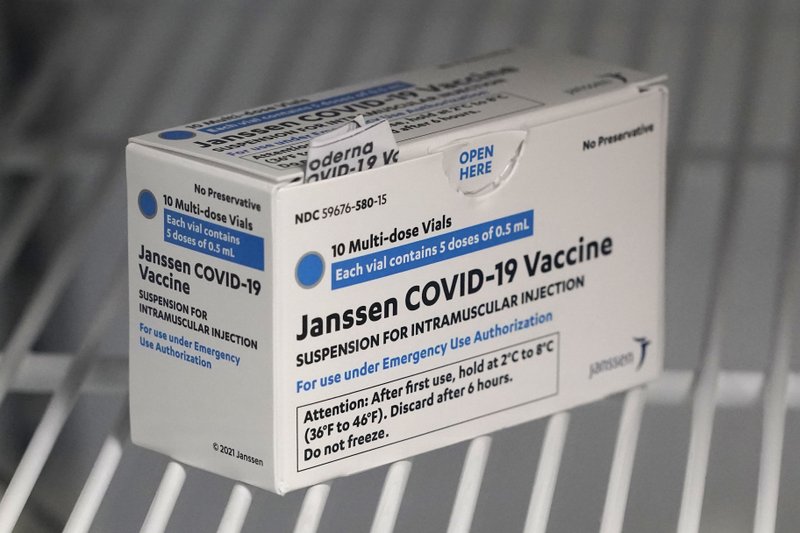
FILE - In this March 25, 2021 file photo, a box of the Johnson & Johnson COVID-19 vaccine is shown in a refrigerator at a clinic in Washington state. A batch of Johnson & Johnson’s COVID-19 vaccine failed quality standards and can’t be used, the drug giant said late Wednesday, March 31, 2021. The drugmaker didn’t say how many doses were lost, and it wasn’t clear how the problem would impact future deliveries. (AP Photo/Ted S. Warren)

The company at the center of quality problems that led Johnson & Johnson to discard an unknown amount of its coronavirus vaccine has a string of citations from U.S. health officials for quality control problems.

Emergent BioSolutions, a little-known company at the center of the vaccine supply chain, was a key to Johnson & Johnson’s plan to deliver 100 million doses of its vaccine to the U.S. by the end of May. But the company has been cited repeatedly by the Food and Drug Administration for problems such as poorly trained employees, cracked vials and mold around one of its facilities, according to records obtained by The Associated Press through the Freedom of Information Act. The records cover inspections at Emergent facilities since 2017.

Johnson & Johnson said Wednesday that a batch of vaccine made by Emergent at its Baltimore factory, known as Bayview, can’t be used because it didn’t meet quality standards. It was unclear how many doses were involved or how the problem would affect future deliveries of J&J’s vaccine. The company said in a statement it was still planning to deliver 100 million doses by the end of June and was “aiming to deliver those doses by the end of May.”

J&J locked arms with Emergent in April 2020, enlisting the lesser-known company to manufacture the vaccine J&J was developing with federal funding. At the time, Emergent’s Bayview facility wasn’t scaled for making millions of doses of a potential COVID-19 vaccine, according to the FDA records that describe the plant as a contract testing laboratory that “did not manufacture products for distribution.” Upgrades in technology and personnel were required before Bayview could begin making what’s known as “drug substance” material for the vaccine, a two-month process during which the required biological cells are grown.

The FDA inspected Emergent’s Bayview plant in April 2020, just as the agreement with J&J was being announced. The federal agency criticized the company for problems with its testing of a potential treatment for anthrax, according to the records obtained by the AP. The FDA’s lead investigator cited the company for failing to train employees “in the particular operations they perform as part of their function and current good manufacturing practices.”

On the same day, Johnson & Johnson, in a separate news release, heralded its partnership with Emergent as a step toward the pharmaceutical giant’s goal of supplying more than 1 billion doses of the vaccine globally by the end of 2021.

Other problems cited by the FDA during the April 2020 inspection included failures by the Bayview plant “to ensure that electronically held data generated during analytical testing” of material “was protected from deletion or manipulation.” The FDA’s lead investigator, Marcellinus Dordunoo, wrote that Emergent hadn’t investigated what he described as “data integrity concerns.”

The inspection was the most recent in a series of critical reports from the FDA about Emergent, including one following a December 2017 inspection at a plant in Canton, Massachusetts, in which the FDA said the company hadn’t corrected “continued low level mold and yeast isolates” found in the facility. Nearly a year later, agency investigators questioned why Emergent had “an unwritten policy of not conducting routine compliance audits” at a separate plant in Baltimore, known as Camden, where an anthrax vaccine is filled into vials.

Emergent’s revenues skyrocketed during the Trump administration, jumping from around $523 million in 2015 to more than $1.5 billion in 2020. The company has invested heavily in lobbying the federal government, according to disclosure records, which show the company spent $3.6 million on lobbying in 2020 alone.

Emergent is one of about 10 companies that Johnson & Johnson is using to speed up manufacturing of its recently approved vaccine, the company said. The Bayview factory where the tainted vaccine ingredient was found had not yet been approved by the FDA, so no vaccine in circulation is affected. Emergent declined to comment.

President Joe Biden has pledged to have enough vaccines for all U.S. adults by the end of May. The U.S. government has ordered enough two-dose shots from Pfizer and Moderna to vaccinate 200 million people to be delivered by late May, plus the 100 million single-dose shots from J&J.

A federal official said Wednesday evening the administration’s goal can be met without additional J&J doses.

A J&J spokesman said earlier Wednesday that the company met the end-of-March goal, and the Centers for Disease Control and Prevention’s online vaccine tracker showed J&J had provided about 6.8 million doses to the U.S. vaccine effort. J&J has been shipping finished vaccines from its factory in the Netherlands to the U.S.

J&J said it was putting more of its manufacturing and quality experts inside Emergent’s factory to supervise production of the COVID-19 vaccine, a move meant to enable delivery of an additional 24 million vaccine doses through April.

J&J said it still expects to deliver more than 1 billion vaccine doses globally by the end of the year.

The J&J vaccine has been viewed as crucial for vaccination campaigns around the world, because only one shot is required and it can be shipped and stored at standard refrigeration temperatures, unlike some other vials that must be kept frozen. The company also has pledged to sell the vaccine without a profit, but only during the pandemic emergency.

The problem with the vaccine batch was first reported by The New York Times. The FDA said it was aware of the situation but declined further comment.

Johnson reported from Fairless Hills, Pennsylvania, and Lardner from Washington. Associated Press writers Matt Perrone and Zeke Miller in Washington and Jason Dearen in New York contributed to this report.

 Coronavirus 


Drugmaker Johnson & Johnson says a quality problem at a Baltimore plant has delayed shipments of its single-dose vaccine. An ingredient mix-up may have ruined as many as 15 million doses, The New York Times reports, delaying FDA authorization of the plant. Meanwhile, we’re learning more about the full impact of the pandemic. Covid-19 was the third leading cause of death last year in the US, behind heart disease and cancer, early CDC data reveals. The virus also led to a global increase in stillbirths, maternal mortality and depression.